Introduction
A FHIR server can be running in an hour. Getting a FHIR project to production can take one to three years. Darren Devitt’s FHIR Architecture Decisions (v1.0) [1] is a candid guide to why — and to the two decisions that matter most: which architectural model, and which FHIR server.
This article is my study note on the book, written so you can get its core ideas in about 15 minutes. It covers three things:
- Classic mistakes and the costs you can predict for each of them;
- The right way of thinking about choosing a model and a server;
- My own project takeaways — general lessons only, with no client or internal details.
Full-text reading time: about 15 minutes.
What it is: a study note (a personal reading reflection), not a translation or a replacement for the book. Want the full book? You are welcome to get it at the bottom: the original book link is in the “Acknowledgement and Disclaimer” section at the end [1].
1. The 3-Minute Version (If You Read Only One Section)
1.1 The One-Sentence Answer
In one sentence
Starting a FHIR project takes an hour; reaching production takes one to three years. This book is not about how to use FHIR. It is about how the architecture decisions you make in the first three months decide the next three years.
It answers just two questions, in this order: (1) which architectural model? (2) which FHIR server?
1.2 Six Things to Remember
- A FHIR server = a FHIR API + a database you cannot touch. It receives requests, validates, reads/writes and responds. It is not a database, not a platform, and it does not make you compliant.
- Three models, three cost structures: Facade (stores nothing, translates legacy data live) → Hybrid (legacy stays the source of truth; the server holds a synced copy) → FHIR-native (the FHIR server is the source of truth). None is best; one is right for now.
- Migration is one-way: Facade → Hybrid → Native is workable; going back is effectively a rebuild. Do not go all-in on native by default.
- Answer nine questions before choosing (why FHIR, who owns the data, where writes land, new vs. existing data, who the consumers are, deal breakers, team capability, budget/timeline, tolerance for change). If you cannot, avoid irreversible decisions.
- Four server categories: managed cloud, enterprise, end-to-end platform, open source. Do not choose by default platform or vendor fame; run a PoC with real volumes and scenarios.
- The server is the tip of the iceberg. Gateway, sync pipelines, repair tools, drift detection, MPI/MDM, terminology, audit — most of it you build or buy yourself.
Free one-page checklist. I turned the nine questions and the review checklist into a one-page PDF you can keep next to your architecture decision record. Get the FHIR Architecture Decision Checklist — free when you subscribe.
2. Map of the Book
2.1 From Demo to Production
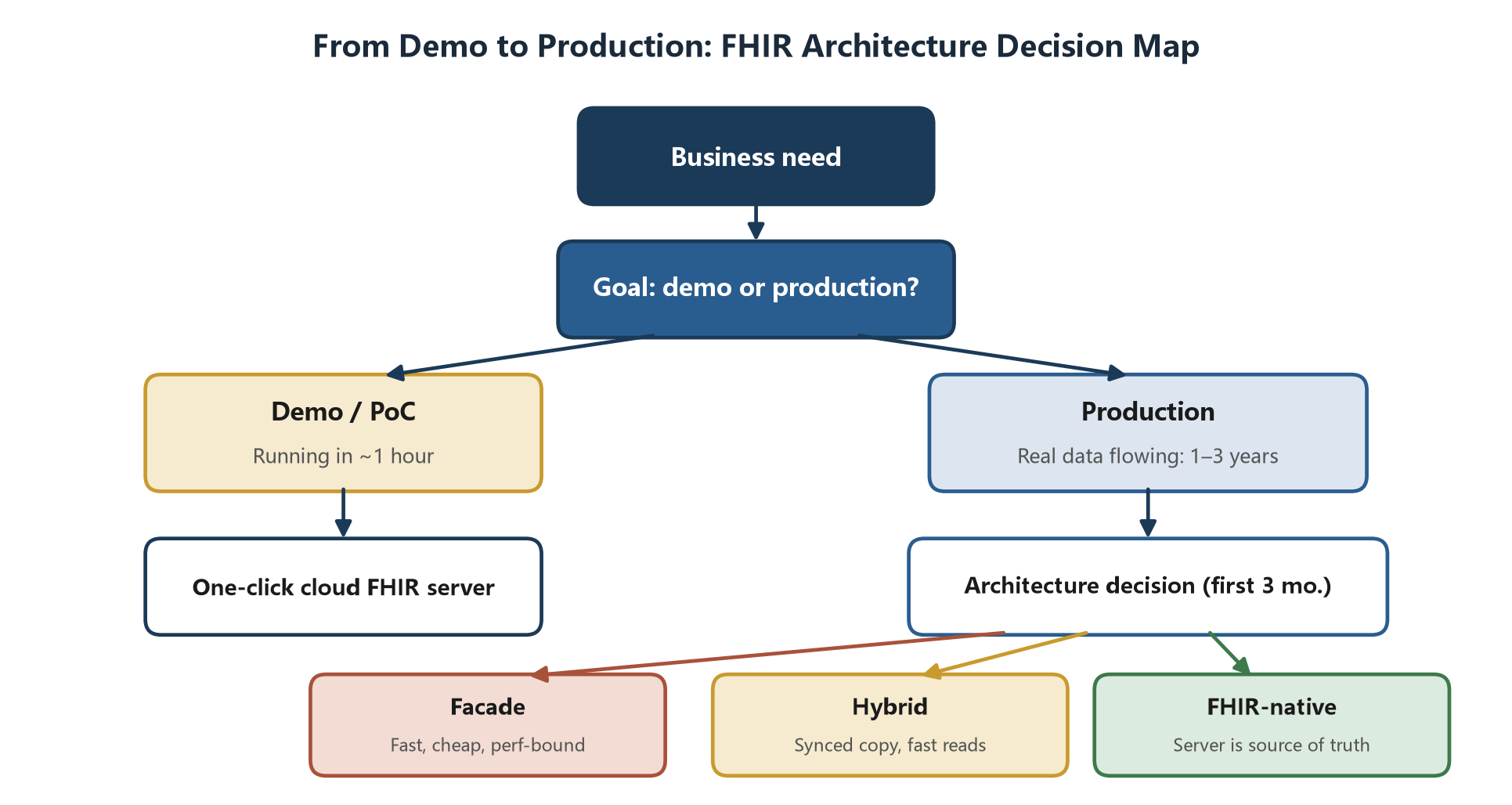
Figure 1 From demo to production: the FHIR architecture decision map (summarized from the book’s structure) [1]
2.2 Chapter by Chapter
| Chapter | Core question | Takeaway |
|---|---|---|
| Introduction | Why do FHIR projects so often go wrong? | 1 hour to start vs. 1–3 years to ship; no neutral architecture guide; decisions get made when the team knows least about FHIR |
| Ch. 1 | What does a FHIR server actually do? | An API plus a hidden database; beware the “platform illusion” |
| Ch. 2 | Three architectural models | Facade / Hybrid / FHIR-native; none is inherently better |
| Ch. 3 | Your requirements and capabilities | Nine questions to answer first |
| Ch. 4–6 | Each model in practice | Fit, boundaries, variants, “hard truths” |
| Ch. 7 | Selecting the architecture | Requirements-to-model mapping; migration paths; why teams pick wrong |
| Ch. 8 | Choosing a server | Four categories; how NOT to choose; run a PoC |
| Appendices | Components beyond the server / vendor landscape | The checklist of what you must provide yourself |
3. Calibrate First: What a Server Does and Does Not Do
3.1 The Server’s Job
A server’s job fits in one line: receive a request → validate as best it can → execute → respond. Everything else is another component’s job — or yours. The FHIR specification itself [2] defines the API, not the architecture around it.
3.2 The “Platform Illusion”
| Common belief (the “platform illusion”) | Reality | Expected cost |
|---|---|---|
| “FHIR is a database; BI can query it directly” | No heavy or aggregate queries; the underlying database is usually not open to SQL | Unmet expectations → rewrites and delays; a warehouse/sync must be built |
| “A big-brand server gives us MPI, master data and governance” | Business validation, MPI/EMPI, golden records, governance, fine-grained access, full auditing, analytics: none are the server’s job | Build effort underestimated; gaps found after go-live |
| “This server supports Regulation X, so we comply” | The server validates and stores what you send; compliance is about your data and process | Compliance risk lands on you |
| “We can swap servers later” | Data moves easily; multi-tenancy, interception, SMART, RBAC differ by vendor, so lock-in is real | Switching = architecture-level rewrite |
4. The Three Architectural Models
4.1 Where Does the Data Live?
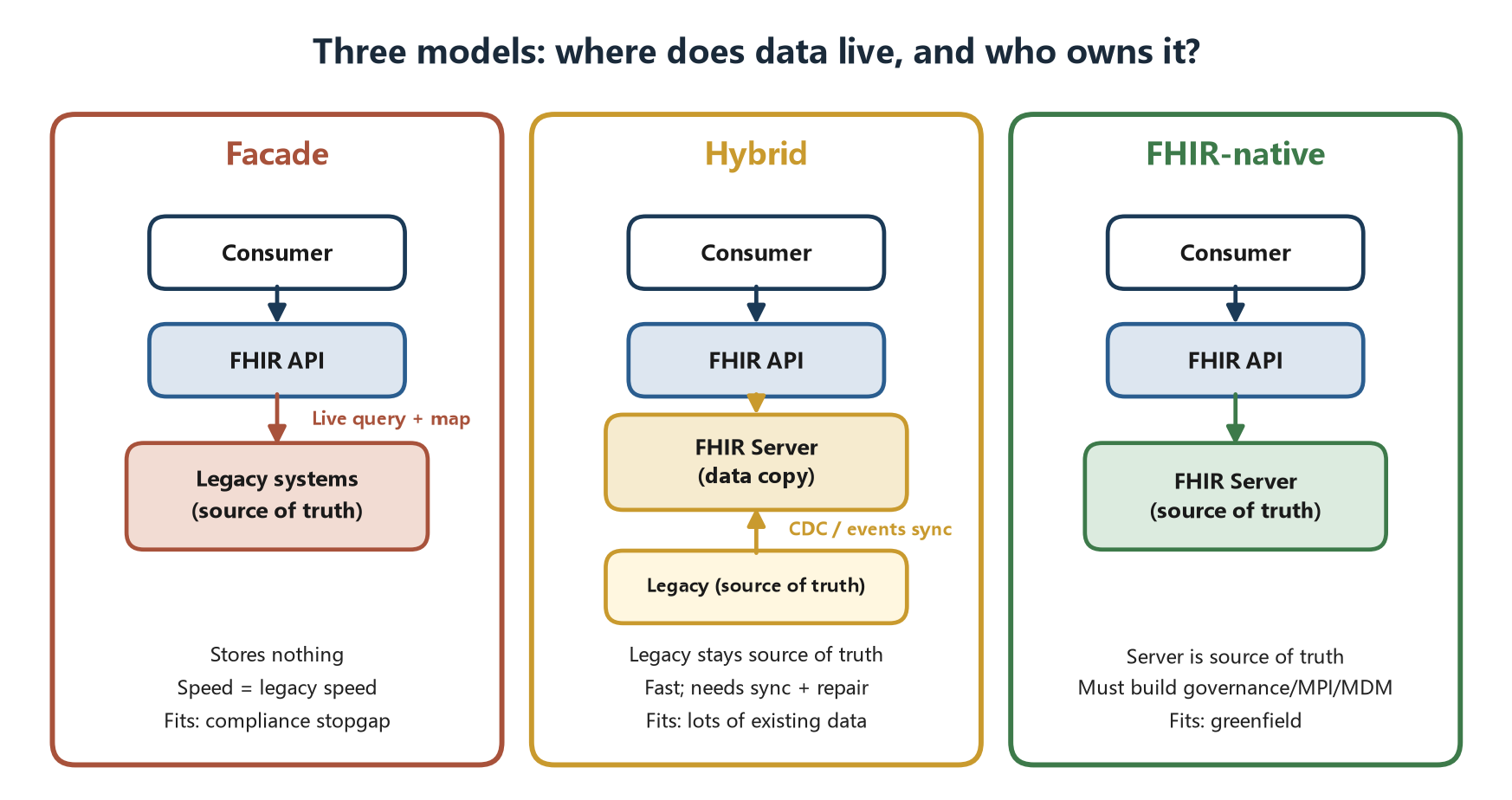
Figure 2 Three models: where does data live, and who is the source of truth?
4.2 Facade vs. Hybrid vs. FHIR-Native
| Facade | Hybrid | FHIR-native | |
|---|---|---|---|
| Essence | Stores nothing; queries legacy live and maps to FHIR | Legacy remains source of truth; the FHIR server holds a synced copy | The FHIR server is source of truth for some or all data |
| Strengths | No data duplication, legacy untouched, fastest to ship | Fast reads, few legacy changes, incremental migration | FHIR end to end; FHIR docs become your docs |
| Main risks | Speed = slowest backend; multi-system bundles; _include is hard; upstream changes silently break mapping | Data drift, sync lag, terminology errors; consumers over-trust the data | Scope underestimated; must build governance, MPI, MDM; FHIR API is not a relational DB |
| Typical use | Compliance check-box, stopgap, small read-only scope, low volume | Lots of existing data + external performance needs | Greenfield; or master data in legacy, transactions in FHIR |
| Needs a server? | Usually not | Yes (not an end-to-end platform) | Yes; enterprise recommended (control) |
5. Pain Points: Classic Mistakes and Their Predictable Cost
This is the most valuable part of the book: the author sees the same traps repeatedly. The table below puts “mistake → cost → right approach” side by side for self-checking [1].
5.1 Eleven Mistakes, Their Cost, and the Fix
| # | Classic mistake | Predictable cost | Right approach |
|---|---|---|---|
| 1 | Treating a smooth demo (one hour on cloud) as “almost done” | Productionization underestimated by years; rewrites, reversals, overruns, missed deadlines, poor releases | Show the business the demo-to-production gap; treat early decisions as formal ADRs |
| 2 | Picking model and server early, when FHIR knowledge and requirements are weakest | Wrong choice found after go-live can take years to fix | Hold irreversible decisions until the nine questions are answered; start mapping with HAPI (Docker) + SDK, which pays off in any model |
| 3 | Treating FHIR as a database/platform (analytics, MPI, governance) | Unmet expectations, rewrites, delays | State the server’s boundary upfront; route analytics to a warehouse/SQL on FHIR; run governance as its own project |
| 4 | Facade as a long-term plan, or ticking a regulatory box with no regard to performance | Falls over under moderate load; complex queries take seconds to minutes; grows into a harder-to-maintain “hybrid” | Keep facades small, read-only, interim; put an API gateway in front for an easy switch to hybrid |
| 5 | Write-enabled facade across several legacy systems | Partial writes, races, mapping errors; often halted, limited or rolled back | Let writes go straight to legacy; if write-back is needed, limit scope and respect the complexity |
| 6 | Going live with hybrid but no data-correction path; over-trusting sync | Drift spirals within weeks; consumers stop trusting the data | Sync is never perfect: reconciliation/drift detection, retries and a manual repair UI are mandatory; make write ownership explicit |
| 7 | Unclear data ownership; patching data on the FHIR side to meet a deadline | Back-doors and jury-rigged fixes cause inconsistency | Decide the source of truth per resource; who validates, who may reject, who resolves conflicts |
| 8 | Choosing FHIR-native out of greenfield enthusiasm; underestimating legacy | Must add governance/MPI/MDM; scope explodes; cannot go back | Without enterprise healthcare data experience, do not start with native; the strongest implementations are hybrid with writes to legacy |
| 9 | Defaulting to the existing cloud’s FHIR service, or following vendor visibility | Feature, data-residency or tenancy mismatch; forced vendor change in two years | Choose by requirements and deal breakers, not brand; run like-for-like PoCs |
| 10 | Believing “it is on the roadmap”, “we support Regulation X”, “fastest in benchmarks” | Promises evaporate; you buy the future, not the present | Pay for what the server does today; find your own references, not vendor-picked ones |
| 11 | Ignoring organizational tolerance for change | Leadership gets cold feet ~18 months in and demands shortcuts | No track record of cross-team delivery? Do not expect this time to differ; start small and incremental |
6. Solution: The Right Way of Thinking
6.1 Answer the Nine Questions First
| # | Question | Where it pushes you |
|---|---|---|
| 1 | Why FHIR? (regulation / interoperability / structured data & AI) | Regulation often fits a facade first; external interoperability and AI need hybrid / native |
| 2 | Publishing data, or building a source of truth? | Source of truth → FHIR-native; publishing → facade / hybrid |
| 3 | Where do writes land and who owns the data? | Unclear boundaries rot hybrids first |
| 4 | Sharing existing data or generating new data? | New data favors native; existing data favors hybrid / facade |
| 5 | Who are the providers and consumers? | External consumers + SLAs often rule out a facade |
| 6 | What are the deal breakers? (residency, authorization, tenancy, Subscriptions, analytics) | Eliminates whole groups of servers |
| 7 | What can the team realistically deliver? | If you cannot build it you cannot ship it; hybrid needs sync expertise, native adds a full source-of-truth system |
| 8 | Budget and timeline? | Tight → start with a facade; time and budget → hybrid |
| 9 | Tolerance for change? | Low → small read-only facade; a “stay the course” culture → complex solutions |
6.2 Choosing the Model: A Decision Tree
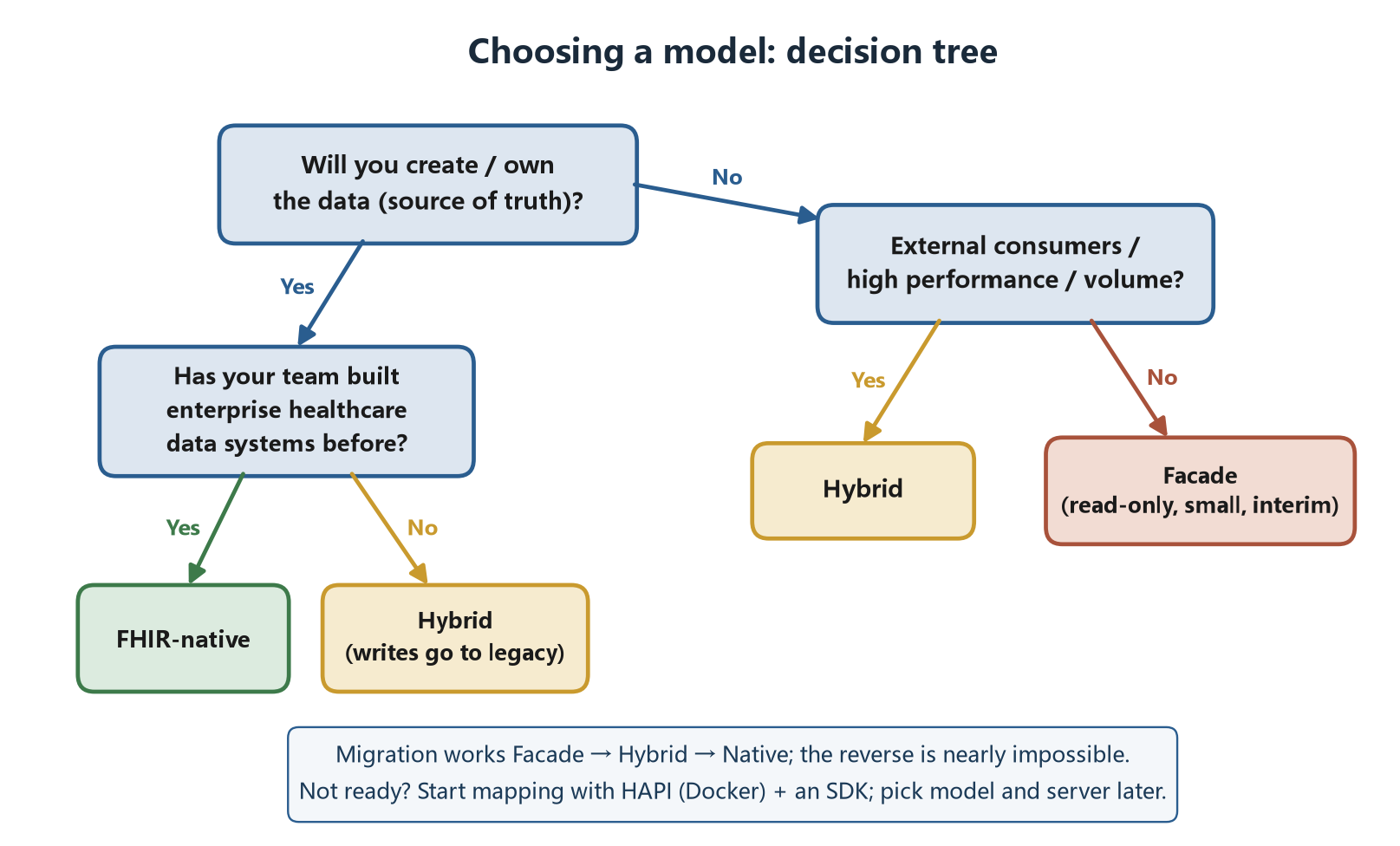
Figure 3 Decision tree for choosing a model (synthesized from Ch. 3 and 7; not a figure from the book) [1]
6.3 Choosing the Server: Four Categories and Elimination
| Category | Good when | Watch out for |
|---|---|---|
| Managed cloud | Start now, no long commitment, no ops, tight integration with your cloud | Little choice of data location; pricing/model changes; upgrades not on your schedule |
| Enterprise (self- or vendor-hosted) | Full control of configuration, performance, deployment; on-prem; first pick for FHIR-native | Months-long sales; annual price typically high five to low six figures; you own the 2 a.m. incident; extras increase lock-in |
| End-to-end platform | Big needs, small team, deep pockets; HL7 v2/DICOM/mapping/governance in one | Heavy lock-in, long contracts, high cost |
| Open source | Cost-driven, strong team, need full flexibility | You build and run everything around it; projects get abandoned — favor stability (the book names HAPI as the low-risk first candidate [1][3]) |
- Do not rely on: feature checklists (most cover most of the spec), “supports Regulation X”, polished demos, vendor-vs-vendor benchmarks, built-in MDM/analytics (source these externally).
- Do rely on: your own PoC (identical tests, realistic volumes and structures, like-for-like), references you find yourself (lead architects on LinkedIn), and vendor stability.
- Bottom line: the “best” server is the one your team can run, support and afford over time.
6.4 Beyond the Server: What Else You Must Provide
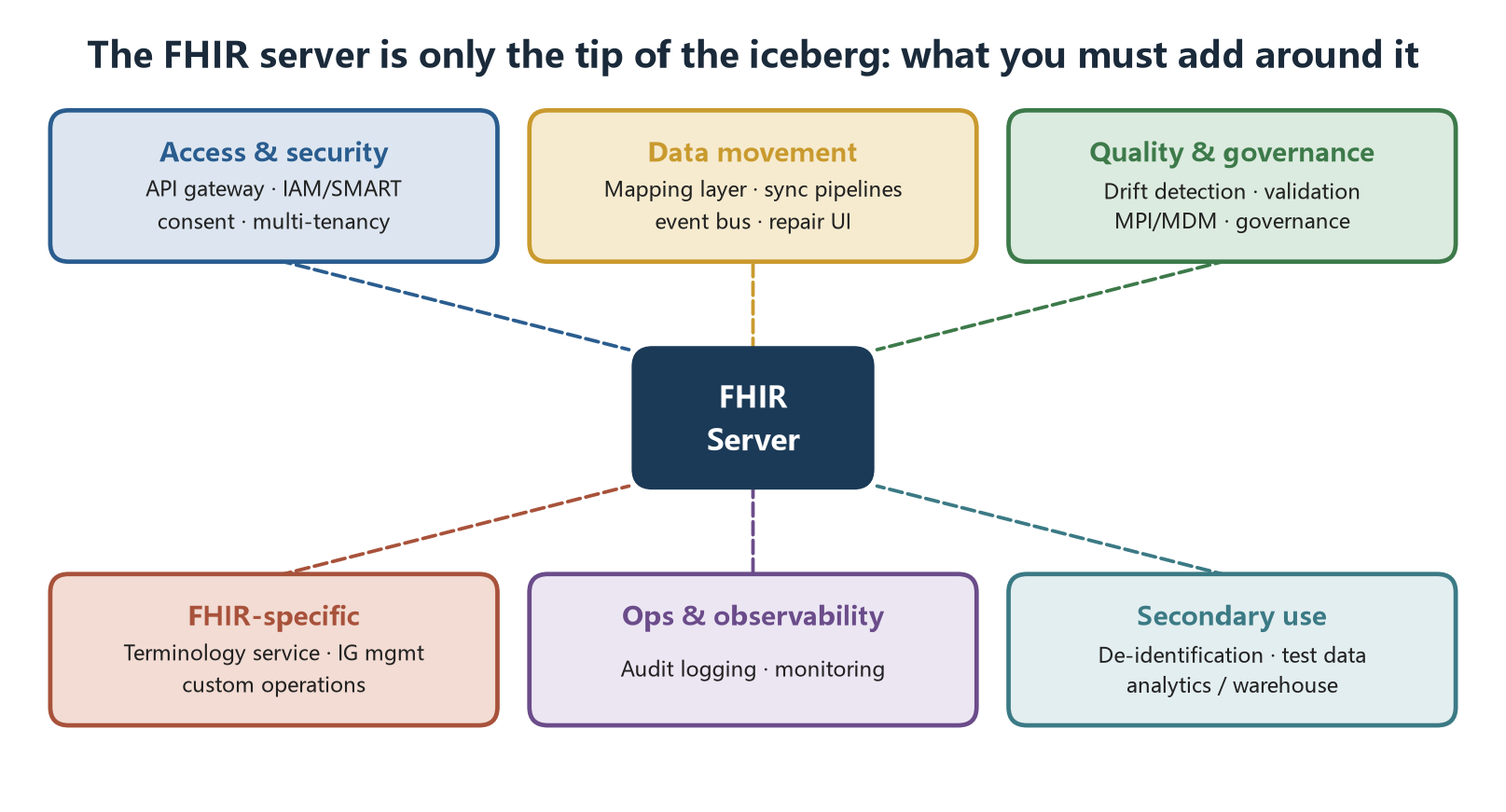
Figure 4 Components around the FHIR server (summarized from Appendix I) [1]
A facade needs a few of these, a hybrid more, FHIR-native nearly all. Data-correction interfaces, reconciliation/drift detection and a data governance framework are mandatory in production, yet they are the ones most often forgotten.
7. My Project Takeaways
These come from my own experience on healthcare data and interoperability work. They are general lessons and contain no client or internal details.
7.1 Lessons From Healthcare Data Work
- “It runs” is only the first gate. The most persuasive slide in a review is not the architecture diagram but the “what is still missing between demo and production” list. It maps directly to budget, people and schedule.
- Write data ownership down as a table. For each resource: source of truth, who may write, who resolves conflicts. It prevents more late-stage disputes than any selection document.
- For compliance-driven needs, start minimal but leave an upgrade door. A gateway in front and strict FHIR conformance make a later switch to hybrid nearly invisible to consumers. It is a cheap way to buy reversibility.
- Sync is never “write it and forget it”. For every sync design I ask three questions: how will we detect errors, how will a human fix them, how do we replay afterwards? If I cannot answer, it does not ship.
- Do not trade lock-in for convenience. Binding to one vendor’s extras to save a little build effort often becomes the thing you cannot move away from years later. Keep general capabilities external and replaceable.
- Put team capability in the decision record. Writing honestly what we can and cannot do in the ADR is far better than explaining delays later.
- Once chosen, stop wavering. Say what you will and will not build, and where it will be slow, and make sure the business understands. The author stresses this repeatedly.
8. Summary
8.1 Core Takeaways
- Decide late, decide with evidence. The costliest mistakes are early, irreversible choices made when FHIR knowledge is weakest. Answer the nine questions first, and prototype before you commit [1].
- Know where the truth lives. Facade, Hybrid and FHIR-native are really three answers to one question: who is the source of truth? Migration only goes one way.
- Plan for the iceberg. The server is a small part of the system. Repair tools, drift detection and governance are mandatory in production and the most often forgotten.
- Choose what your team can run. The “best” server is the one your team can operate, support and afford over time — proven by your own PoC, not a vendor demo.
8.2 One-Page Checklist (for Review)
- Are we building a demo or production? Is productionization budgeted in years, not weeks?
- Do all nine questions have written answers? Which are still assumptions?
- For each resource: who is the source of truth, what is the write path, who resolves conflicts?
- Which model did we pick, and why not the other two? Is it in an ADR?
- Does the business understand that FHIR is not a database, and where analytics will live?
- Are server candidates requirement-driven, not default- or brand-driven? Did we run a PoC (real volumes, like-for-like)?
- Have deal breakers (residency, authorization, tenancy, Subscriptions) been confirmed?
- Are repair tools, reconciliation/drift detection, retries, audit and monitoring on the roadmap?
- Have team capability and organizational patience been assessed honestly?
8.3 The Bottom Line
FHIR gets you started in an hour. Architecture decisions decide whether you ship in a year or in three. This note is only a map — if you run FHIR projects, read the original [1].
Take the checklist with you. I turned the nine questions and the review checklist into a one-page PDF you can keep next to your architecture decision record. Get the FHIR Architecture Decision Checklist — free when you subscribe.
9. References
- FHIR Architecture Decisions (v1.0) | Darren Devitt | https://darrendevitt.com/fhir-architecture-decisions-book/
- HL7 FHIR Release 4 (R4) Specification | HL7 International | https://hl7.org/fhir/R4/
- HAPI FHIR — open-source FHIR server and libraries | HAPI FHIR project | https://hapifhir.io/
Tribute to the author
Sincere thanks to Darren Devitt for a candid, restrained and practical guide drawn from real projects. These notes are written with great respect for the work of the author; if you run FHIR projects, I strongly recommend reading the original.
Original book: https://darrendevitt.com/fhir-architecture-decisions-book/
Disclaimer
These notes are a personal reading reflection for self-review and quick orientation for others. I have not contacted the author and have no authorization from the author. The figures are my own summaries of the book’s content, not the book’s illustrations, and the text is paraphrased. “FHIR” and the flame icon are registered trademarks of HL7. If anything here infringes any rights, you are welcome to contact me and I will revise or delete it immediately. This is not technical, legal or investment advice.
Free: the FHIR Architecture Decision Checklist (PDF) — 9 questions to answer before you commit to a model or a server. Subscribers get both checklists and a short note when I publish something new.
Notes on healthcare interoperability and AI, plus occasional updates on new tools and resources I make. No spam. Unsubscribe anytime.
Comments